Why Productions Need On-Site Cover
A film or TV set may look polished on screen, but behind the camera it is a fast-moving working environment with real health and safety risks.
Productions can involve high-powered lighting, generators, rigging, cabling, working at height, long hours, night shoots, large crews, live audiences, vehicles, stunts, pyrotechnics and remote locations. When someone becomes unwell or injured on set, waiting for external help is not always enough. Productions need a clear, practical plan for immediate medical support.
That is where professional film and TV medical support comes in.
Professional on-site medical cover helps protect cast, crew, contributors, audiences and production teams. It also supports risk management, insurance requirements, filming schedules and the wider duty of care expected on professional productions.
In this guide, we explain what production medical support involves, when TV and film medical cover may be needed, what level of cover productions should consider and how to choose the right medical provider.
What Is a Film Set Medic?
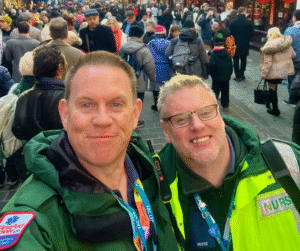
A film set medic, sometimes called a unit medic, production medic, film medic, TV medic or set nurse, provides first aid and medical support during filming.
Most clients in production will request a “medic”, but the term itself can be very vague.
In practice, “medic” could describe anything from a registered healthcare professional, such as a set nurse or paramedic, through to a junior responder with only a few days of training. This is why the term should always be clarified before booking cover.
At First Aid Cover, we advise all production clients to assess the risk of the shoot and staff accordingly. Our quotes do not rely on the broad term “medic”. Instead, we identify the actual skill level of the individual or team member being provided, so clients understand exactly who will be attending and what level of care they are qualified to deliver.
The ultimate role of a medical team member in production is to support the health and welfare of people on set, respond quickly to illness or injury, and help the production manage medical risks without disrupting the shoot unnecessarily.
Depending on the production, medical support may be required for:
- Cast members
- Crew
- Extras and background artists
- Presenters and contributors
- Studio audiences
- Stunt teams
- Production staff
- Contractors and suppliers
- Members of the public affected by filming activity
The exact level of medical cover required should be based on the production risk assessment.
Some low-risk shoots may only need basic first aid support, while higher-risk productions may need experienced clinical team members, paramedics, nurses, doctors, ambulances or specialist trauma cover.
Film Set Medics: Is It Time for a Change?
The term “medic” is often used and sometimes misused in the event first aid and medical sector.
There is perhaps no better example of this than in production settings.
The term can sound more advanced than “first responder” and may create the impression that a registered paramedic, nurse or doctor is attending. In reality, that is not always the case.
First Aid Cover recalls speaking to a production client who believed they had booked four doctors. They were surprised and disappointed to discover on site that they had actually booked four first aiders wearing uniforms and ID badges that used the word “medic”. This is a clear example of how vague descriptions of clinical skill can be misunderstood.
We advise any client, whether booking for an event or a production, to ask for the actual skill level of any individual referred to as a “medic”.
The right choice depends on the nature of the production and the risks identified in the assessment.
For example, a simple office-based interview shoot may only need a basic first aid presence. A stunt-heavy production, live broadcast, remote location shoot or large studio recording may need more advanced medical support.
A professional provider should not simply send one standard option to every production. They should assess the shoot, understand the call sheet and recommend proportionate cover.
Perhaps it is time for the vague term “medic” to be replaced with the actual clinical skill level that individual is qualified to work to.
Why Film and TV Productions Need Medical Support
Film and TV productions are not ordinary workplaces. The risks change from day to day, location to location and scene to scene.
A production may move from a quiet studio setup in the morning to an outdoor night shoot, a stunt sequence or a large live audience recording later the same week.
This makes medical planning especially important.
On-site medical cover can help with:
- Immediate treatment for injuries and illness
- Reducing unnecessary production delays
- Supporting cast and crew welfare
- Managing higher-risk scenes
- Providing reassurance to insurers, broadcasters and production teams
- Helping the production respond professionally if something goes wrong
- Supporting health and safety planning before and during filming
Having the right cover in place is not just about emergencies. A competent member of the medical team can also help manage minor issues before they become bigger problems, such as dehydration, fatigue, headaches, minor wounds, anxiety, heat stress or flare-ups of existing medical conditions.
Common Medical Risks on Film and TV Sets
Every production is different, but common risk factors include the following.
Stunts and Action Sequences
Fight scenes, falls, vehicle work, wire work, freerunning, sports sequences and physical performance all increase the risk of injury. These scenes often need more advanced medical planning and closer coordination with the stunt coordinator, safety team and assistant directors.
Pyrotechnics and Special Effects
Fire, smoke, explosions, atmospheric effects, water effects and practical special effects can introduce burn, respiratory, eye and trauma risks. Medical support should be planned around the specific effect being used and the people exposed to it.
Long Working Hours and Night Shoots
Long days, early starts, night shoots and demanding schedules can increase fatigue. Fatigue can contribute to accidents, slower reaction times, dehydration, stress and illness.
Remote or Outdoor Locations
Remote shoots can create extra challenges because emergency services may take longer to arrive. Weather, ground conditions, difficult access, poor phone signal and distance from hospital services should all be considered.
Large Crews, Extras and Audiences
The more people on site, the more likely it is that someone may need medical help. Large studio audiences, extras, live events and public filming locations may require additional first aid or medical support.
Working at Height, Rigging and Equipment
Lighting rigs, camera platforms, scaffolding, cranes, cables, generators and set builds can create workplace risks similar to construction, events and live production environments.
Children, Vulnerable Contributors and High-Profile Talent
Productions involving children, older contributors, vulnerable people or high-profile talent may need additional welfare planning, privacy and discretion.
Clients can feel at ease knowing that First Aid Cover’s team members are thoroughly vetted and enhanced DBS checked.
Is Medical Cover on Shoots and Film Sets Legally Required in the UK?
There is no single UK law that says every film or TV production must have qualified first aid or medical support on site at all times.
However, productions do have legal duties under health and safety law. The Health and Safety Executive explains that health and safety legislation applies to film, TV and broadcasting work in the UK, and that legal duties cannot be delegated.
Employers and production companies must assess risk and put suitable measures in place to reduce those risks. First aid provision should be adequate and appropriate for the work being carried out.
In practice, this means medical cover should be based on the production risk assessment.
A low-risk shoot may need a basic first aid arrangement. A higher-risk production involving stunts, remote locations, live audiences, pyrotechnics, vehicles, water, animals, children or large crews may require professional medical support on site.
Insurers, broadcasters, venues, local authorities or production safety teams may also expect medical cover as part of the production’s risk management process.
What Does TV Medical Support Include?
TV medical support can be tailored to the type of production, location, schedule and risk profile.
Depending on the shoot, it may include the following.
Unit and Location Medical Support
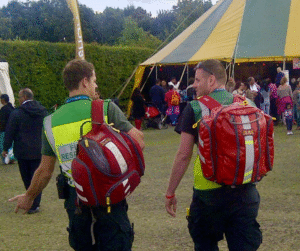
Unit or location medical support provides day-to-day first aid or clinical care on set. The team member may treat minor injuries, assess illness, support welfare issues, advise on escalation and remain available throughout the filming day.
They should understand the pace of production and work discreetly alongside the crew.
First Responders and Ambulance Crews
For some productions, first responders or ambulance crews may be suitable, particularly where there are larger sites, physical activity, public-facing elements or a need for rapid response.
Paramedics, Nurses and Doctors
Higher-risk productions may need registered healthcare professionals such as paramedics, nurses or doctors.
This may be appropriate for stunt work, remote locations, large audiences, live broadcasts, complex scenes or productions involving increased medical risk.
Registered clinicians should hold current UK registration with the appropriate professional body, such as the HCPC, NMC or GMC.
Ambulances and Response Vehicles
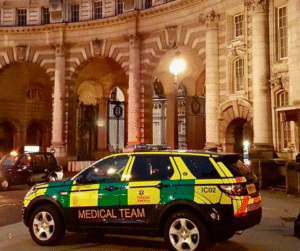
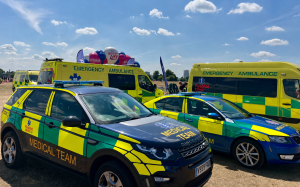
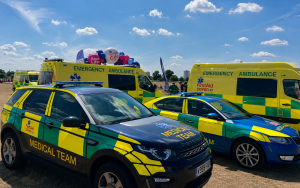
Some productions may need an ambulance or response vehicle on standby. This can be useful where hospital transfer may be required, where the location is remote, or where the level of risk justifies dedicated vehicle support.
If a provider is transporting patients to hospital in an ambulance, they should be able to explain their CQC registration status and what type of transport or treatment they are able to provide.
On-Set Treatment Areas
Larger productions, studio recordings, live events or longer shoots may benefit from a dedicated treatment area. This gives the medical team a suitable space to assess and manage minor injuries, illness or more serious incidents away from the main set.
Medical Planning and Risk Assessment Support
A good provider can also support planning before filming begins. This may include reviewing the call sheet, considering location risks, identifying higher-risk scenes and advising on the appropriate level of medical cover.
Medical Cover for Stunts, Action and Special Effects
Stunts, fights, vehicle work, pyrotechnics, special effects and physically demanding scenes should be planned carefully.
For higher-risk scenes, medical support should be integrated into the wider production safety plan.
The medical provider may need to liaise with:
- The stunt coordinator
- Assistant directors
- The production safety team
- Location managers
- Special effects teams
- Security and stewards
- Event control or unit base
- Emergency services where appropriate
The medical plan should consider how someone would be reached, treated and moved safely if an incident occurred during a take.
For these types of scenes, productions may need more than a basic first aider. Depending on the risk assessment, they may require paramedics, trauma-trained clinicians, ambulance crews or specialist medical support.
Medical Cover for Live Broadcasts and Studio Audiences
Live TV and audience-based productions create their own challenges. There may be hundreds or thousands of people in one venue, limited time between takes, strict broadcast schedules and a need to manage incidents discreetly.
Medical cover for these productions may need to support:
- Cast and presenters
- Crew
- Audience members
- Contributors
- Backstage areas
- Front-of-house areas
- Queues and holding spaces
- Emergency evacuation procedures
The aim is to provide safe, visible and professional support while minimising disruption to filming or transmission.
Medical Cover for Remote Location Shoots
Remote location shoots often need more planning because access to NHS services may be slower or more difficult.
Risks may include:
•Poor road access
•Limited mobile signal
•Severe weather
•Difficult terrain
•Water or coastal locations
•Rural areas
•Night filming
•Long travel times to hospital
In these cases, productions may need a more advanced clinical team member, a 4×4 response unit, an ambulance, additional equipment or a clear evacuation plan.
How Early Should You Book Film and TV Medical Support?
Medical cover should be considered during pre-production, not left until the last minute.
Booking early allows the provider to understand the production, review risk assessments, plan staffing, arrange vehicles if needed and advise on any higher-risk filming days.
Why Choose First Aid Cover Ltd for Film and TV Productions?
First Aid Cover provides film and TV medical support in London and across the UK. Our experienced teams can support everything from small studio shoots and location filming to live broadcasts, major productions and high-risk filming environments.
Our teams are professional, discreet, thoroughly vetted and enhanced DBS checked. We are experienced in working in fast-moving environments where safety and continuity both matter.
Book Film and TV Medical Support
Whether you are planning a one-day studio shoot, a multi-day location production, a live broadcast, a stunt sequence or a large-scale filming project, First Aid Cover can help you put the right medical support in place.
We will assess your production, understand the risks and recommend proportionate cover based on your call sheet, location and filming activity.
Contact First Aid Cover today to request a free quote for film and TV medical support.