Every event organiser eventually asks the same question: how much first aid do we actually need on site?
It is a fair question, and the honest answer is that there is no single number written in law that says an event of a certain size must have a fixed number of first aiders. Instead, event first aid requirements in the UK are based on risk, the type of event, the people attending, the activities taking place, the location, the duration and the level of medical support that may reasonably be needed.
Get it right and you protect your attendees, your staff and your organisation. Get it wrong and you risk unsafe provision, licensing issues, reputational damage and potential legal consequences.
This guide explains first aid at events requirements in the UK in plain English, including what the law says, what recognised guidance recommends, how medical cover is assessed and what organisers should consider before booking an event first aid provider.
Is There a Law That Says How Much First Aid an Event Needs?
There is no single UK law that states an event with a certain number of people must have a specific number of first aiders. Instead, event organisers need to consider several overlapping duties and guidance sources.
The Health and Safety at Work etc. Act 1974 applies to most events because events usually involve work activity during set-up, delivery or breakdown. It places duties on organisers and employers to protect workers and others who may be affected by the event, including members of the public.
The Management of Health and Safety at Work Regulations 1999 require a suitable and sufficient risk assessment. This is the foundation for deciding what level of first aid and medical cover may be needed.
The Health and Safety (First-Aid) Regulations 1981 require employers to provide adequate and appropriate first aid for employees. These regulations do not directly require employers to provide first aid for members of the public, but the Health and Safety Executive strongly recommends that employers include the public in their first-aid needs assessment and make provision for them.
Where an event involves alcohol sales, regulated entertainment or late-night refreshment, licensing requirements may also apply. Depending on the size and type of event, this could involve a Temporary Event Notice, a premises licence or review by a local authority or Safety Advisory Group.
In short, the law does not give a simple headcount formula. Organisers are expected to assess the risks and make suitable, proportionate arrangements for first aid and medical support.
What Guidance Should Event Organisers Use?
Because the law sets broad duties rather than fixed staffing numbers, event organisers often rely on recognised industry guidance when deciding what is suitable.
The main sources include:
The Purple Guide
The Purple Guide to Health, Safety and Welfare at Music and Other Events is widely used across the events industry, particularly for music, outdoor and large public events. Its medical chapter sets out good practice that organisers should consider, including Medical Needs Assessments, medical specifications, staff qualifications, medical facilities, communications and record keeping. The Purple Guide states that it is industry guidance and may not cover everything that needs to be considered for a particular event.
HSE First Aid Guidance
The HSE explains that employers must assess first aid needs based on the circumstances of the work, including hazards, risks, workforce size and other relevant factors. For events, HSE also strongly recommends including members of the public in the assessment.
The Green Guide
For events at sports grounds or venues with spectator accommodation, the Sports Grounds Safety Authority’s Green Guide may be relevant.
The SGSA says that the appropriate level of medical and first aid provision at a sports ground should be determined through a Medical Needs Assessment carried out by a competent person or medical provider.
Local Authority and Licensing Guidance
Local authorities, licensing teams, Safety Advisory Groups, venues and insurers may also set expectations for event medical provision. Their requirements can vary depending on the event, location and risk profile.
Following recognised guidance does not remove the organiser’s responsibility, but it helps demonstrate that medical provision has been considered carefully and planned properly.
Event First Aid Requirements Are Based on Risk, Not Just Attendance
One of the most important things to understand is that event first aid requirements are not based on attendee numbers alone.
A low-risk indoor business event for 300 people will have very different medical needs compared with a 300-person endurance race, boxing event or outdoor festival. Equally, a small event in a remote location may need more robust medical planning than a larger event next to a hospital with easy ambulance access.
A proper event first aid assessment should consider:
- Expected attendance and peak crowd numbers
- Audience profile
- Event type and activities
- Event duration
- Alcohol or substance-related risk
- Weather and environmental conditions
Site layout and access - Distance from local NHS services
- Previous incident history
- Vulnerable groups attending
- Build-up and breakdown periods
- Licensing, venue or council requirements
This is why online event first aid calculators can only ever provide a starting point. They may be helpful for initial planning, but the final level of cover should be confirmed through a proper risk assessment or Medical Needs Assessment.
What Is a Medical Needs Assessment?
A Medical Needs Assessment is a structured review of the medical risks associated with an event. It helps determine what level of first aiders, medics, clinicians, vehicles, treatment areas and equipment may be needed.
The Purple Guide includes Medical Needs Assessment guidance, including assessing medical cover, creating a medical specification and considering different levels of event complexity.
For sports grounds, the SGSA also recommends a Medical Needs Assessment to determine appropriate medical and first aid provision, taking into account the capacity, layout, complexity, nature of the event, spectator profile and other relevant factors.
A Medical Needs Assessment may consider:
- What could realistically go wrong
- How likely incidents are
- How serious those incidents could be
- How quickly help needs to reach someone
- Whether patients can be treated safely on site
- Whether ambulance transfer may be needed
- What equipment and facilities are required
- How medical teams will communicate with event control
- How the event will escalate a serious incident
For larger or more complex events, the findings should usually be developed into a written medical plan.
What Is a Medical Plan?
A medical plan explains how first aid and medical provision will work during the event. It gives organisers, venues, local authorities, Safety Advisory Groups and event control a clear overview of the medical arrangements.
A medical plan may include:
- Medical staffing levels and roles
- First aid posts and treatment centre locations
- Ambulance and response vehicle provision
- Radio and communication procedures
- Patient transfer arrangements
- Escalation routes
- Major incident procedures
- Clinical leadership structure
- Liaison with stewards, security and event control
- Equipment and facilities
- Record keeping and reporting
- Safeguarding considerations
For small, low-risk events, the plan may be simple. For festivals, public gatherings, sporting events, parades, city-wide events or licensed events, it may need to be much more detailed.
What Level of Cover Does a Small Event Need?
Small, low-risk events may only need a modest level of first aid provision. This could include a trained first aider, suitable first aid kit, access to an AED where appropriate, clear emergency procedures and the ability to contact emergency services.
Examples may include:
- Small community gatherings
- Low-risk charity events
- Indoor meetings
- Small private functions
- Short-duration public events with limited activity
However, size alone is not enough to decide. A small boxing event, endurance challenge, outdoor activity day or remote event may need more support than a larger but lower-risk indoor event.
What Level of Cover Does a Medium-Sized Event Need?
Medium-sized events may need a dedicated first aid or medical team, especially if they are open to the public, licensed, involve alcohol, include physical activity or take place outdoors.
Cover may include:
- First aiders or event responders
- A nominated medical lead
- A first aid post
- Clear communication with stewards and event control
- Emergency escalation procedures
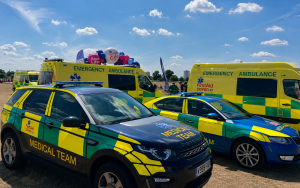
- Ambulance or response vehicle provision if patient transfer is likely
Examples may include:
- Local festivals
- Community fairs
- Sporting fixtures
- Charity runs
- School competitions
- Corporate events
- Outdoor public gatherings
What Level of Cover Does a Large or High-Risk Event Need?
Large, complex or higher-risk events usually need more detailed medical planning and a wider mix of staff, equipment and facilities.
Cover may include:
- First aiders and event responders
- Paramedics, nurses and doctors
- Ambulance crews
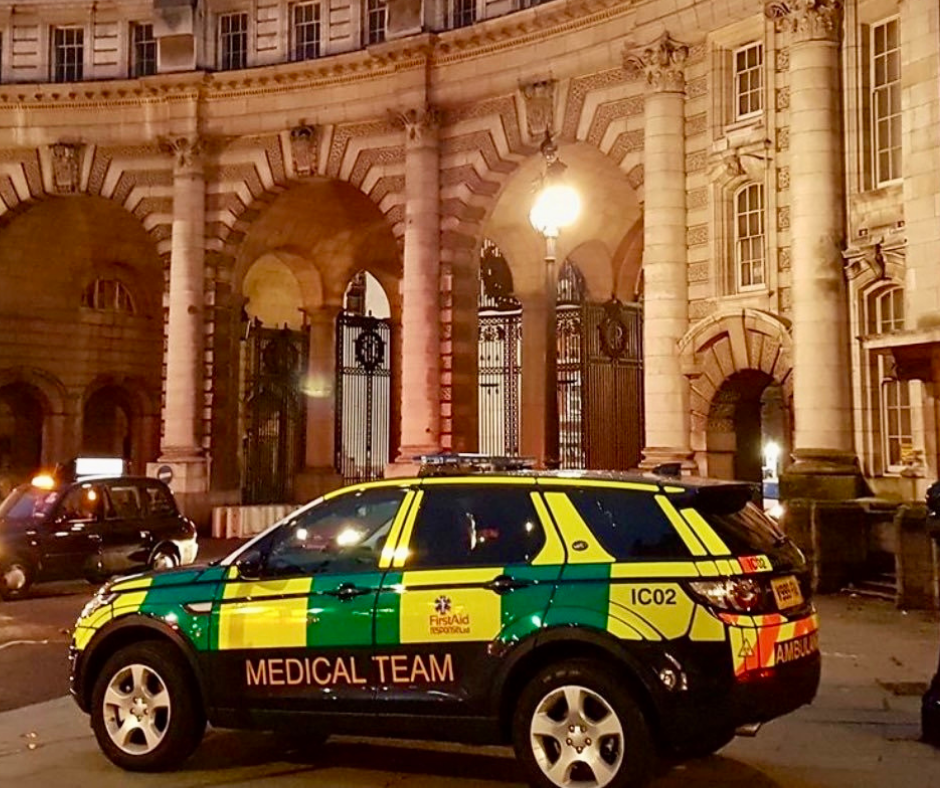
- Rapid response vehicles
- Cycle response teams
- Treatment centres
- Clinical leadership
- Emergency medical dispatch
- Integration with event control
- Written medical operational plans
- Liaison with local authorities or Safety Advisory Groups
Examples may include:
- Music festivals
- Marathons
- Major sporting events
- Parades
- Carnivals
- Large public celebrations
- City centre events
- TV and film productions
- Multi-day events
What Qualifications Should Event First Aid Staff Have?
The qualifications required will depend on the role, the risk level and the type of event.
Organisers should check that the provider can supply suitably trained and experienced staff.
This may include:
- First aiders with appropriate first aid qualifications
- Event medical responders with relevant pre-hospital training
- Paramedics registered with the HCPC
- Nurses registered with the NMC
- Doctors registered with the GMC
- Ambulance crews trained for the role they are carrying out
- DBS-checked staff where appropriate
- Uniformed staff with photographic identification
It is important not to assume that all “first aiders” or “medics” have the same level of training. A professional provider should be able to explain who will be attending, what they are qualified to do and how they will be supervised.
Get Expert Event Medical Cover
Working out the right level of first aid cover for an event does not have to be complicated. The key is to assess the risks properly and put proportionate, professional support in place.
At First Aid Cover, we provide event medical cover in London and across the UK, supporting events of all sizes with trained teams, ambulances, response units, cycle response teams, treatment centres and medical risk assessments.
Our experienced team can help you understand what level of cover your event needs and create a tailored medical plan that supports safety, compliance and peace of mind.
Contact First Aid Cover today to request a free quote for your event.