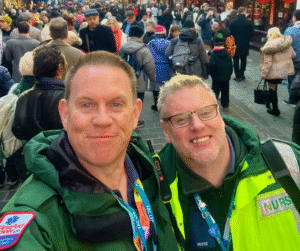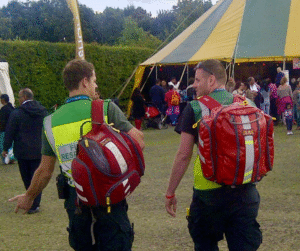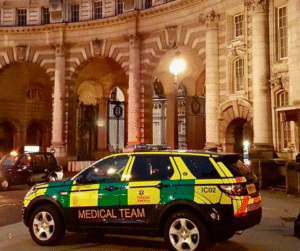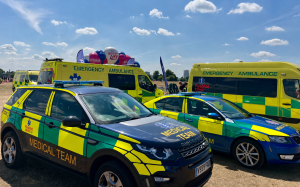
Sporting events can be exciting, high-energy and unpredictable. Whether you are organising a school rugby fixture, a local 5K, a charity bike ride, a marathon, a boxing event, a cycling race or a televised sporting competition, having the right first aid and medical cover in place is essential.
Sports events carry risks for both participants and spectators. Athletes may suffer sprains, fractures, head injuries, heat exhaustion, dehydration, cardiac issues or impact-related injuries. Spectators, staff and volunteers may also need support for slips, falls, fainting, illness or crowd-related incidents.
First aid cover for sporting events helps make sure trained professionals are on site, ready to respond quickly and appropriately. The level of cover you need will depend on the type of sport, the number of participants and spectators, the venue, the event duration and the overall risk profile.
At First Aid Cover, we provide specialist medical cover for sporting events in London and across the UK, supporting everything from grassroots fixtures and school competitions to major public and televised events.
Why First Aid Cover Matters at Sporting Events
Sporting events place extra demands on medical planning because there are often two groups to consider: the people taking part and the people watching.
Participants may be exposed to physical contact, endurance strain, falls, collisions or environmental conditions. Spectators may be in busy stands, open public spaces, temporary event sites or large crowds where access can be challenging.
Professional first aid and medical cover helps to:
- Provide rapid treatment for athletes, spectators, staff and volunteers
- Reduce the risk of minor injuries becoming more serious
- Support safe escalation if hospital transfer is required
- Reassure participants, families, officials and organisers
- Help organisers meet venue, council, licensing or governing body expectations
- Keep the event running as safely and smoothly as possible
For organisers, medical cover is not just about having someone available if something goes wrong. It is about planning ahead, identifying likely risks and making sure the right team, equipment and response process are in place before the event begins.
Is First Aid Cover Required for Sporting Events?
The level of first aid or medical cover needed at a sporting event should be based on a proper risk assessment. There is no single answer that applies to every event, because a small school sports day and a large city marathon will have very different requirements.
Organisers should consider the health, safety and welfare of participants, spectators, staff, contractors and volunteers. For some events, venues, local authorities, Safety Advisory Groups, insurers or sports governing bodies may also ask for evidence of suitable medical provision before the event can go ahead.
For example, England Athletics states that event organisers should ensure they have sufficient first aid cover in place and that licence applications will not be approved until this has been confirmed. The Sports Grounds Safety Authority also says that medical and first aid provision at sports grounds should be determined by a Medical Needs Assessment.
The safest approach is to arrange medical planning early and work with an experienced sporting event medical provider who can recommend suitable cover.
What Affects the Level of Medical Cover You Need?
Every sporting event is different. The right medical cover will depend on several key factors.
1. The Type of Sport
Different sports carry different levels of risk.
A contact sport such as rugby, boxing or martial arts may need immediate access to suitably trained clinicians who can assess trauma, head injuries or impact-related incidents.
An endurance event such as a marathon, triathlon, cycling race or long-distance charity walk may need support for dehydration, collapse, heat illness, exhaustion, musculoskeletal injuries and medical emergencies across a wide event footprint.
A school tournament, football fixture or community sports event may need a proportionate first aid team, clear escalation routes and support for both players and spectators.
The medical plan should always reflect the demands of the sport itself.
2. Number of Participants and Spectators
The more people attending, the more medical planning is required. A sports event may have a small number of competitors but a large crowd, or it may involve thousands of participants spread across a route.
Organisers should consider:
- Expected participant numbers
- Expected spectator numbers
- Peak attendance times
- Crowd density
- Athlete areas, warm-up zones and finish areas
- Whether spectators are seated, standing or spread across a route
The medical team needs to be positioned where incidents are most likely to happen and where access may be difficult.
3. Venue and Site Layout
Venue layout has a major impact on sporting event medical cover. A stadium, school playing field, race route, boxing arena, city square or cycling course will all need different arrangements.
Important site factors include:
- Access for ambulances and emergency vehicles
- Distance from the nearest hospital or NHS ambulance access point
- Restricted areas, barriers, road closures or temporary structures
- Athlete-only areas and spectator zones
- Treatment centre locations
- Communication with stewards, officials and event control
For large or complex venues, static first aid points may not be enough. Mobile teams, cycle response medics, 4x4s or rapid response vehicles may be needed to reach patients quickly.
4. Event Duration and Timing
Longer events create additional risks. A short fixture may only need cover for a few hours, while a full-day competition, multi-stage cycling event or weekend tournament may need rotating teams, rest breaks, treatment facilities and more detailed planning.
Timing can also affect risk. Events taking place in hot weather, cold conditions, poor light or over long periods may require additional medical support.
5. Weather and Environmental Conditions
Outdoor sporting events are especially affected by weather. Heat, cold, rain, wind and poor ground conditions can all increase the likelihood of injury or illness.
Common weather-related issues include:
- Heat exhaustion
- Dehydration
- Hypothermia
- Slips and falls
- Muscle cramps
- Breathing difficulties
- Increased fatigue among participants
A good medical plan should consider the time of year, event location, forecast conditions and contingency plans.
What Can First Aid Cover for Sporting Events Include?
Sporting event medical cover can range from a small first aid team to a full multi-disciplinary medical operation with doctors, paramedics, nurses, ambulances, cycle response teams and treatment centres.
The right support may include the following.
First Aiders and First Responders
First aiders and first responders can provide immediate support for minor injuries, illness and initial assessment. They are often suitable for smaller or lower-risk sporting events, or as part of a wider team at larger events.
They may manage cuts, sprains, fainting, minor wounds, basic first aid needs and escalation where further clinical support is required.
Pitchside or Course-Side Medical Teams
Some sports need medical staff positioned close to the action. This may include doctors, paramedics, nurses, first responders or other suitably trained professionals depending on the risk level and governing body requirements.
Pitchside or course-side teams are particularly important where rapid assessment is needed, such as contact sports, high-impact events, motorsport-style activity, cycling, freerunning, boxing or endurance races.
Ambulances and Response Units
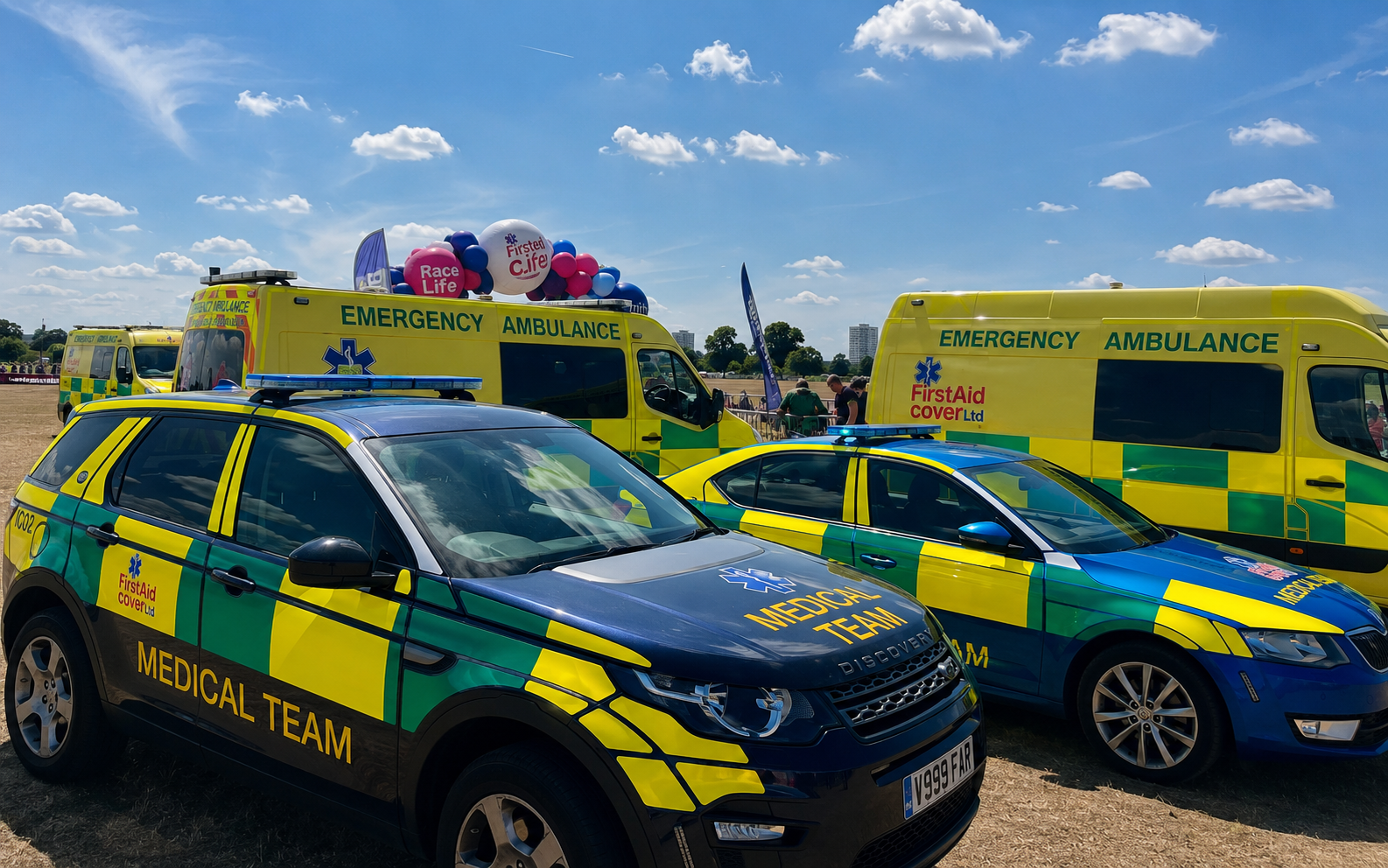
Some sporting events require ambulances, 4x4s or rapid response vehicles on standby. These can support emergency treatment, safe patient movement and hospital transfer where required.
At larger sites, GPS-tracked vehicles can help dispatch teams quickly to the right location, especially where the event covers a wide area or includes road closures.
Cycle Response Teams
Cycle response teams can be especially useful for marathons, cycling events, stadiums, parks, city centre events and crowded public spaces. Medics on bikes can often reach patients faster than vehicles in areas with dense crowds, narrow access points or restricted vehicle movement.
They can carry essential equipment, begin treatment quickly and coordinate with ambulances, treatment centres and event control.
Medical and Treatment Centres
For larger sporting events, an on-site treatment centre provides a clear, visible point for assessment and care. This can be used for triage, minor injuries, observation and more serious incidents depending on the level of staffing and equipment.
Treatment centres can also reduce unnecessary hospital transfers by allowing suitable patients to be assessed and managed on site.
Medical Planning and Risk Assessments
A professional provider should assess the event before recommending cover. For sporting events, this may include:
- Sport type and injury risk
- Participant numbers and fitness level
- Spectator numbers and crowd profile
- Venue layout and access routes
- Weather and environmental conditions
- Distance from local NHS services
- Governing body or licensing requirements
- Emergency escalation procedures
- Communication with stewards, officials and event control
For larger events, a Medical Operational Plan may also be required so organisers, venues, councils and Safety Advisory Groups can clearly understand the proposed medical arrangements.
Examples of Sporting Event Medical Cover
A school rugby tournament may need first aiders, pitchside support and a clear process for managing head injuries, fractures or other player injuries.
A local 5K or charity run may need first aiders at the start and finish, mobile response along the route and a plan for dehydration, collapse or minor injuries.
A marathon or cycling event may need medical teams across multiple points, cycle response units, ambulances, treatment areas and coordination with event control.
A boxing, freerunning or televised sports event may need doctors, paramedics, nurses, treatment facilities and ambulance support due to the higher risk of trauma and the need to minimise disruption.
A stadium or large spectator event may need separate planning for athletes, spectators, staff and officials, with medical points across stands, concourses and restricted areas.
The key is to match the medical cover to the event, not rely on a generic package.
Why Choose First Aid Cover for Sporting Events?
First Aid Cover has experience supporting a wide range of sporting events, from school rugby to televised world boxing and cycling events. Our clients and event experience include major fixtures such as the London Marathon, RideLondon, the ATCO World Squash Championships and the World Freerun Championships.
We provide tailored medical cover for sporting events across London and the UK, with teams scaled to the size, risk and structure of each event.
Our sporting event medical services can include:
- First aiders and first responders
- Paramedics, nurses and doctors
- Pitchside and course-side medical teams
- Ambulances and rapid response vehicles
- 4×4 response units
- Cycle response teams
- On-site treatment centres
- Medical risk assessments
- Medical operational planning
- Coordination with stewards, referees, safety teams and event control
All cover is planned around the specific needs of the event, helping organisers protect participants, spectators and staff from start to finish.
Major Sporting Event Experience: World Freerun Championships
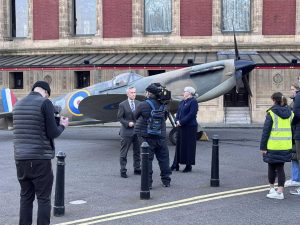
First Aid Cover provided full medical support for the World Freerun Championships in Trafalgar Square, central London. The event attracted approximately 10,000 spectators and involved high-risk sporting activity in a busy public space.
The organiser needed medical provision that could protect athletes, manage crowd-related incidents and meet local authority licensing requirements. As the event was televised live, it was also important that any medical response could be delivered quickly and professionally with minimal disruption.
Our team carried out a full venue risk assessment and deployed a comprehensive medical plan. This included a trauma doctor, advanced paramedics, nurses, a physiotherapist, ambulance crews and first responders. We also provided a full treatment centre and two ambulances on standby.
Medical staff were positioned throughout Trafalgar Square, supported by GPS tracking, direct integration with stewards and safety officials, an emergency medical dispatcher and an NHS incident response officer.
The result was a safe and well-supported event, with 94% of cases resolved on site without hospital transfer, response times consistently under two minutes, all local authority licensing requirements met and post-event organiser feedback of 5/5.
How Early Should You Arrange Sporting Event First Aid Cover?
It is best to arrange first aid cover as early as possible, especially if your event involves a licence application, council approval, a Safety Advisory Group, road closures, a large audience or a governing body requirement.
Early planning gives your medical provider time to assess the event properly, advise on staffing levels, arrange vehicles, prepare documentation and coordinate with other teams involved in event safety.
If you are unsure what level of medical cover your event needs, the first step is to request advice from a specialist provider.
Get the Right First Aid Cover for Your Sporting Event
Sporting events need fast, reliable and well-planned medical support. From minor injuries to serious emergencies, the right cover helps protect athletes, spectators, staff and organisers.
Whether you are planning a local sports fixture, school tournament, charity run, marathon, cycling event, boxing match or major televised competition, First Aid Cover can provide a tailored medical plan for your event.
Contact First Aid Cover today to request a free quote and find out what support your sporting event needs.