If you are organising a public event, there is a good chance you will be asked for a first aid plan at some point in the planning process.
Whether you are planning a festival, sporting competition, community gathering, charity event, corporate event or large public celebration, councils, venues, insurers, licensing teams and Safety Advisory Groups may want to see that medical provision has been properly considered.
A well-written event first aid plan is not just a compliance document. It is a practical planning tool that helps you think through what could happen, how your team would respond and what support needs to be in place before the event begins.
This guide explains how to write a first aid plan for your event and what it should include.
What Is an Event First Aid Plan?
An event first aid plan is a document that explains how first aid and medical incidents will be managed at an event.
It may also be called a medical plan, event medical plan or event medical management plan.
The plan should describe:
- The type of event being held
- The medical risks associated with the event
- The first aid or medical resources in place
- Where medical teams and equipment will be positioned
- How incidents will be reported and managed
- How serious incidents will be escalated
- How emergency services can access the site if required
A first aid plan is closely linked to your event risk assessment, but it is not the same thing.
The risk assessment identifies hazards and considers how likely they are to cause harm. The first aid plan explains the specific medical response if someone becomes injured, unwell or requires urgent care during the event.
For larger or higher-risk events, the plan may need to be shared with the venue, local authority, licensing team, insurer or Safety Advisory Group.
The Health and Safety Executive says event organisers are responsible for ensuring overall safety at an event so that, as far as reasonably practicable, people setting up, breaking down and attending are not exposed to risks to their health and safety.
HSE also strongly recommends including the visiting public in first aid, medical and ambulance needs assessments.
Step 1: Start With an Event Overview
The first section of your event first aid plan should give a clear overview of the event.
This helps anyone reviewing the plan understand the context before looking at the medical arrangements.
Include:
- Event name
- Event type
- Location and full site address
- Event date or dates
- Build-up and breakdown times
- Public opening times
- Expected attendance
- Peak attendance
- Participant numbers, if relevant
- Audience profile
- Key activities taking place
- Whether alcohol will be available
- Whether the event is ticketed, public, private or licensed
- Name and contact details of the event organiser
This section does not need to be long, but it should give enough information for the medical provision to make sense.
For example, a seated corporate event for 300 guests will have a very different risk profile to a 300-person obstacle race, outdoor music event or late-night licensed event.
Step 2: Summarise the Medical Risks
The next step is to summarise the medical risks linked to the event.
This should be based on your wider event risk assessment and any previous event data if the event has taken place before.
Common factors that may increase medical risk include:
- Large attendance
- High crowd density
- Alcohol or substance-related risk
- Physical activity
- Extreme weather
- Outdoor locations
- Remote or difficult-to-access sites
- Children, older people or vulnerable attendees
- Long event duration
- Camping or overnight attendance
- Temporary structures
- Stunts, vehicles, animals, pyrotechnics or special effects
- Poor access for emergency vehicles
- Previous incidents at similar events
The Purple Guide states that the level of medical cover needed at an event depends on the scale of the event and the activities taking place. It also includes a Medical Needs Assessment framework to help organisers consider medical provision in a structured way.
This section should not downplay risk just to justify a lower level of cover. It should give a realistic picture of what could happen and how the event will manage it.
Step 3: Set Out Your Medical Staffing
Your first aid plan should clearly explain who will provide medical cover at the event.
Avoid vague phrases such as “qualified first aiders will be on site”. Instead, be specific.
Include:
- Number of first aiders, responders or medical staff
- Staff roles
- Qualifications or clinical grades
- Whether paramedics, nurses or doctors will be present
- Whether staff are DBS-checked, where relevant
- Whether staff are uniformed and identifiable
- Who the medical lead is
- When medical staff will arrive and leave
- Whether cover includes build-up and breakdown
- How staffing changes across the event day
For larger or higher-risk events, you may need different levels of cover at different times. For example, more medical staff may be needed during peak attendance, a main performance, a sporting activity, a finish-line period or an evening licensed session.
If you are working with a professional event medical provider, they should be able to provide staffing details that can be included directly in your plan.
Step 4: List the Equipment on Site
Your first aid plan should include a clear list of medical equipment available at the event.
This may include:
- First aid kits
- AEDs
- Oxygen
- Stretchers
- Trauma equipment
- Response bags
- Radios or communication devices
- Ambulances
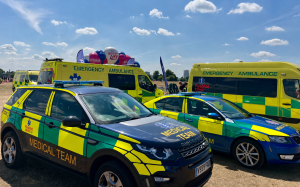
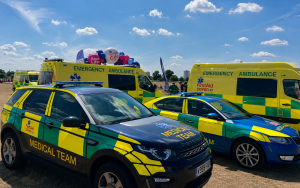
- 4x4s or rapid response vehicles
- Cycle response equipment
- Treatment centre supplies
- PPE and infection control equipment
- Blankets, screens or privacy equipment
The equipment should match the risk profile of the event. A small community event may only need basic first aid equipment and an AED. A festival, sporting event or large public event may need more advanced equipment, vehicles and treatment facilities.
If AEDs are provided, the plan should state where they are located and who can access them.
Step 5: Mark First Aid Posts and Treatment Areas
The plan should explain where first aid posts, treatment centres or medical points will be positioned.
Include:
- Fixed first aid post locations
- Mobile medical team locations
- Treatment centre location
- Ambulance parking or standby areas
- Access points for emergency vehicles
- Routes between medical points and event control
- Locations of AEDs
- Any areas with restricted access
Ideally, these should be shown on a site map.
First aid locations should be easy to find, clearly signed and accessible to both attendees and medical teams. For large sites, one first aid post may not be enough. You may need multiple medical points, mobile teams or cycle response units depending on the layout.
Consider whether medical teams can reach high-risk areas quickly. If they cannot, the plan may need to be adjusted.
Step 6: Explain Communication Procedures
Communication is one of the most important parts of an event first aid plan.
Your plan should explain how the medical team will communicate with:
- Event control
- Security
- Stewards
- The event organiser
- Venue management
- Emergency services
- Other medical staff on site
Include:
- Radio channels
- Mobile phone backup numbers
- Who is responsible for contacting 999
- How incidents will be reported to event control
- How location information will be shared
- What happens if radio or mobile signal fails
- How public announcements will be coordinated if required
HSE guidance on incidents and emergencies says organisers should plan for how official event messages will be communicated to the public in conjunction with emergency services.
For larger events, communications should be tested before the event starts. If parts of the site have poor signal, this should be identified early and planned around.
Step 7: Plan Emergency Services Access
Your first aid plan should explain how emergency services can access the site if they are needed.
Include:
- The nearest access points
- Emergency vehicle routes
- Gate names or numbers
- What3Words references, if useful
- Road closure information
- Who will meet emergency services on arrival
- How they will be guided to the patient
- Any locked gates, barriers or restricted routes
- Alternative access routes if the main route is blocked
For some events, especially larger or higher-risk events, it may be appropriate to notify or liaise with the local NHS ambulance service in advance.
The North East Ambulance Service guidance for event organisers says the level of medical cover required should be decided after a medical needs assessment, considering what might happen, what skills and experience are needed to deal with it and who is able to provide them. It also points organisers towards recognised guidance such as the Purple Guide.
Step 8: Set Out Escalation Procedures
A good event first aid plan should explain what happens when an incident is more serious than expected.
This should include:
- Who assesses the patient
- Who decides whether to call 999
- Who communicates with emergency services
- Where the patient will be taken for treatment
- Whether an ambulance on site can be used
- How patient transfer will be managed
- How event control will be updated
- How the incident will be recorded
- What happens if there are multiple patients
- How a major incident would be declared or escalated
The escalation process should be clear enough that everyone involved understands their role.
This is especially important at events with large crowds, multiple zones, road closures, remote locations or high-risk activities.
Step 9: Include Incident Reporting and Record Keeping
Your plan should explain how medical incidents will be recorded during and after the event.
This may include:
- Patient report forms
- Incident logs
- Accident book entries
- Safeguarding records
- Referrals to emergency services
- Hospital transfers
- Post-event summary reports
- Data protection arrangements
Incident records help organisers understand what happened during the event, whether the medical provision was suitable and what could be improved next time.
They can also be useful for insurers, venues, local authorities or internal event reviews.
Step 10: Review and Update the Plan
A first aid plan should not be copied from a previous event without review.
Even if the event is annual, things can change. Attendance may increase, the site layout may move, the audience profile may shift, the activities may be different or new licence conditions may apply.
Before every event, review:
- Attendance numbers
- Site layout
- Event timings
- Activities
- Weather considerations
- Staffing levels
- Medical provider details
- Communication procedures
- Emergency access routes
- Previous incident reports
- Any new council, venue or licensing requirements
After the event, hold a short review and note any lessons for next time.
What Licensing Authorities May Look For
Requirements vary depending on the council, venue, event type and licence conditions. However, when reviewing a first aid plan, licensing authorities, venues or Safety Advisory Groups may look for evidence that the medical arrangements are suitable and proportionate.
They may consider:
- Whether the level of cover matches the event risk
- Whether staff numbers and qualifications are clearly stated
- Whether AEDs and equipment are available where appropriate
- Whether first aid posts are clearly located
- Whether emergency services can access the site
- Whether communication routes are clear
- Whether incident reporting is in place
- Whether the plan has been prepared by or reviewed with competent support
HSE explains that Safety Advisory Groups provide advice and guidance, but HSE inspectors are not in a position to authorise or approve an event organiser’s safety plan. The overall responsibility remains with the organiser and relevant dutyholders.
Common Mistakes in Event First Aid Plans
Understating the Risk
Some plans minimise the real risks of the event to justify lower provision. This can cause problems if the event changes, attendance increases or an incident occurs.
A good plan should be realistic and proportionate.
Being Too Vague About Staffing
A plan that says “medical cover will be provided” is not detailed enough.
It should explain who is attending, what their role is, what qualifications they hold and when they will be on site.
Forgetting Build-Up and Breakdown
Incidents can happen before gates open and after the public leave. Staff, contractors and suppliers may still be working on site, often with vehicles, temporary structures, equipment and tired teams.
Your first aid plan should consider the full event lifecycle.
Not Planning Communications
If no one knows who to call, which radio channel to use or how to direct medical teams to a patient, response times can be affected.
Communication planning should be included from the start.
Not Updating the Plan
An old plan may not reflect the current event. Always review and update it for the specific date, venue, layout and attendance.
Do You Need a First Aid Plan for a Small Event?
Small, low-risk events may not need a long or complex medical plan, but they still need first aid arrangements.
For a small event, this may include:
- A basic risk assessment
- A trained first aider
- A first aid kit
- Access to an AED where appropriate
- A clear emergency procedure
- A way to contact emergency services
- A named person responsible for first aid arrangements
The more complex or public-facing the event becomes, the more detailed the plan is likely to need to be.
FAQs
Do I need a first aid plan for a small event?
Small events may not need a long formal document, but they should still have clear first aid arrangements. This may include a named first aider, a first aid kit, access to emergency services and a simple written plan.
Who approves an event first aid plan?
This depends on the event. A venue, insurer, local authority, licensing officer or Safety Advisory Group may review the plan. In many cases, they provide advice or set expectations rather than formally approving every part of the plan.
What qualifications do event first aiders need?
This depends on the risk level of the event. Some events may need trained first aiders, while others may require first responders, ambulance crews, paramedics, nurses or doctors. The provider should be able to explain the qualifications and roles of the staff attending.
How detailed does an event first aid plan need to be?
The plan should be proportionate to the event. A small community event may only need a simple plan, while a festival, sporting event, public event or licensed event may need a detailed medical plan with staffing, equipment, communications, escalation and emergency access arrangements.
Can First Aid Cover help us write our first aid plan?
Yes. First Aid Cover can support event organisers by advising on appropriate medical provision and providing the staffing, equipment, deployment and protocol details needed for your first aid plan.
Get Support With Your Event First Aid Plan
A well-written event first aid plan helps protect attendees, staff, contractors, performers and organisers. It also gives venues, councils, insurers and event partners confidence that medical provision has been properly considered.
If you are planning an event and need help understanding what first aid or medical cover is required, First Aid Cover can help.
Our experienced team provides event medical cover in London and across the UK, including first aiders, responders, paramedics, nurses, doctors, ambulances, cycle response teams, treatment centres and medical planning support.
Contact First Aid Cover today to request a free quote and discuss your event first aid plan.